
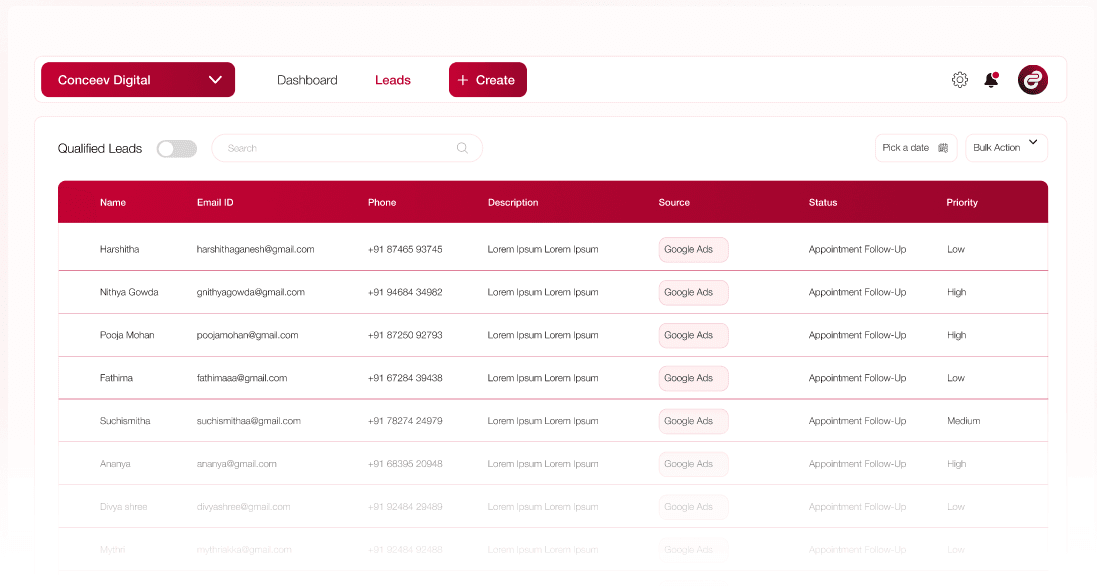
In today’s fast-paced digital world, customer expectations are higher than ever. Businesses are no longer relying on spreadsheets or basic tools to manage customer relationships. Instead, they’re moving toward Custom CRM Development — a smarter, more scalable solution that helps teams manage leads, track customer journeys, automate workflows, and drive growth.
Whether you’re a startup, SME, or enterprise, a well-built CRM system can transform the way you serve customers and manage operations.
What Is CRM Development?
CRM development involves designing, building, and customizing a Customer Relationship Management system to suit a company’s unique workflow. Unlike ready-made CRM tools, a custom-built CRM gives businesses complete control — from lead management to automation, reporting, customer support, and integrations.
Modern CRM development combines technologies like web apps, cloud solutions, automation, AI, and analytics to deliver a tailored customer-management experience.
Why Businesses Need Custom CRM Development
- Tailored to Your Process: Every business has its own sales stages, workflow structure, and customer lifecycle. A custom CRM adapts to your exact needs — not the other way around.
- Improved Lead & Sales Tracking: From lead capture to deal closure, CRM ensures no lead is missed. Automated reminders, scoring, and pipeline tracking increase conversion rates.
- Enhanced Customer Experience: Track customer interactions, preferences, and behaviour to offer more personalized communication.
- Smooth Team Collaboration: Sales, marketing, support, and management can all work in one system with real-time updates.
- Automation Saves Time: Automated follow-ups, notifications, and task assignments significantly reduce manual workload.
- Powerful Analytics & Reporting: CRM dashboards provide insights into sales performance, ROI, customer retention, and marketing efficiency.
Key Features of a Custom CRM System
- Lead Management: Capture leads from websites, ads, landing pages, social media, and calls — all in one place.
- Sales Pipeline Management: Track each lead through stages like New → Follow-up → Meeting → Quote → Client Won.
- Task & Reminder Automation: Auto-assign tasks to sales reps, set follow-up reminders, and reduce missed opportunities.
- Customer Data Management: Store all customer info, documents, conversations, and service history in a secure environment.
- Analytics & Reporting: Real-time insights into revenue, conversion rate, lead source performance, and team activity.
Benefits of Custom CRM Over Ready-Made CRM
Custom CRM development is ideal for businesses that want complete control, advanced automation, and long-term cost efficiency.
- Flexibility: Fully Custom vs Limited
- Cost: One-time development + maintenance vs Monthly subscription
- Data Ownership: Complete data control vs Shared servers
Industries That Benefit from CRM Development
Healthcare & Hospitals, Real Estate, Education & EdTech, E-commerce, Travel & Hospitality, Finance, Manufacturing, Startups & Agencies.
Conclusion
A custom-built CRM is more than a tool — it’s a growth engine. It helps businesses automate operations, improve customer retention, and make data-driven decisions. As companies move toward digital transformation in 2025, investing in CRM development is no longer optional — it’s essential.
FAQs
1. What is CRM development?
CRM development involves creating a customised Customer Relationship Management system that helps businesses manage leads, customers, sales, and workflows efficiently.
2. Why should a business choose a custom CRM?
Custom CRM systems are built to match your exact business processes, offering more flexibility, better automation, and long-term cost savings.
3. How long does it take to develop a CRM?
Depending on features and complexity, CRM development usually takes 4–12 weeks from planning to deployment.
4. Can a CRM integrate with third-party tools?
Yes. A custom CRM can integrate with websites, WhatsApp API, SMS/email tools, payment gateways, ERPs, and more.
5. Is CRM development expensive?
The cost depends on features, integrations, and custom modules, but it is often more cost-effective than paying lifetime subscription fees for ready-made CRMs.